
Law Students from Four Australian Universities Participate in BABSEACLE International Legal Studies Externship Program
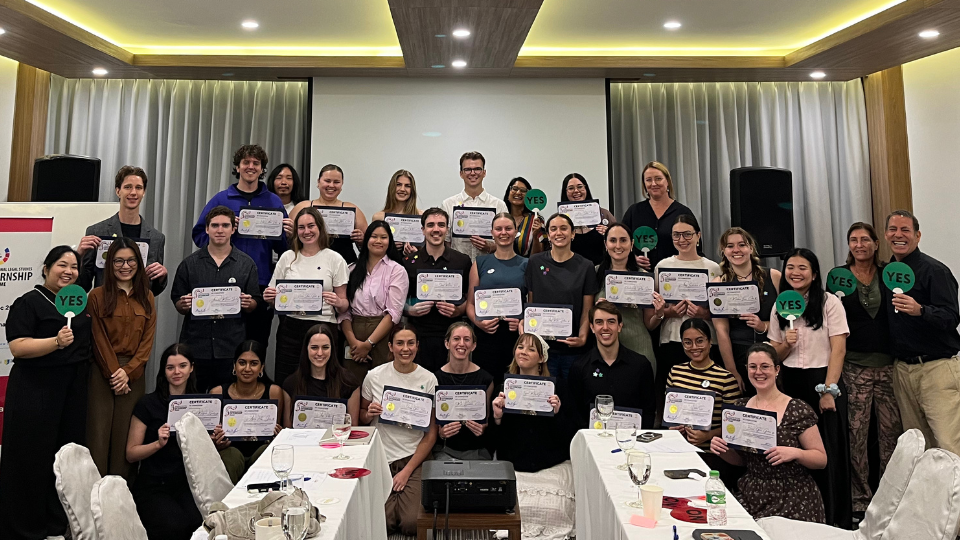
BABSEACLE, as well as a consortium of Australian universities that consists of Queensland University of Technology, The University of Newcastle, Griffith University, and Southern Cross University, successfully co-hosted the International Legal Studies Externship Program for two weeks in Chiang Mai, Thailand, with the participation of twenty-three Australian law students supported by the New Colombo Plan mobility grants. The externship program, which began on 24 November 2025 and ended on 5 December 2025, immersed students in collaborative work experience in a justice education-focused non-profit, deepening their understanding of the role they can play in bridging access-to-justice gaps in society. It also instilled the pro bono ethos they will need as future lawyers and ethical legal professionals, while fostering an appreciation of cross-cultural similarities and differences in legal practices, values, beliefs, and language.
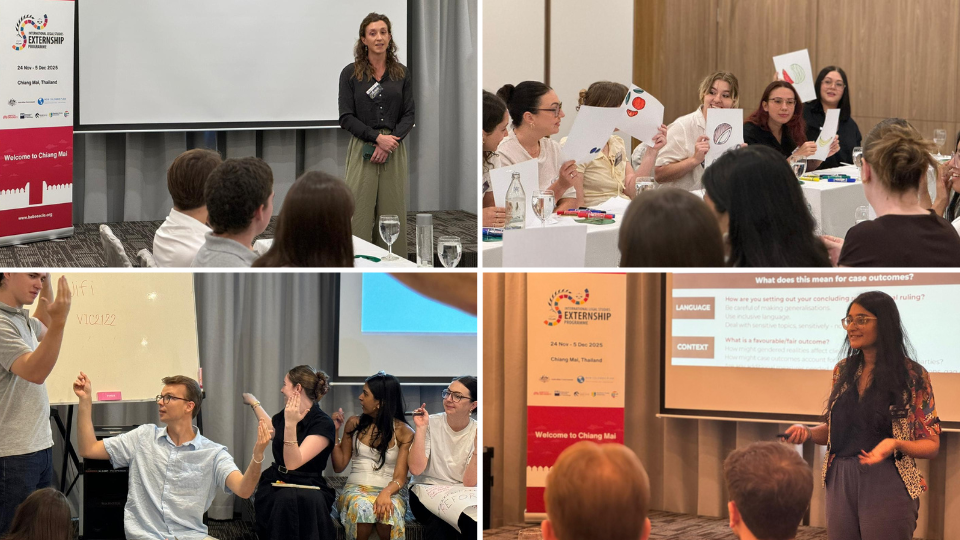
The externship program began with an engaging orientation session led by the BABSEACLE team, where students played an icebreker activity to get to know their mentors and fellow colleagues whom they would work with, and were introduced to the organization’s long-standing initiatives along with an overview of the externship placement. Students heard firsthand insights into the journey from law school graduation to working as in-house counsel, legal advocacy and gender justice, including emerging trends of human trafficking and what can be done to prevent these threats, from guest speakers Lauren van Arendonk (Intrépido Ltd), Chandni Brown (JUST Impact), and Kevin Miller (SEATECT).
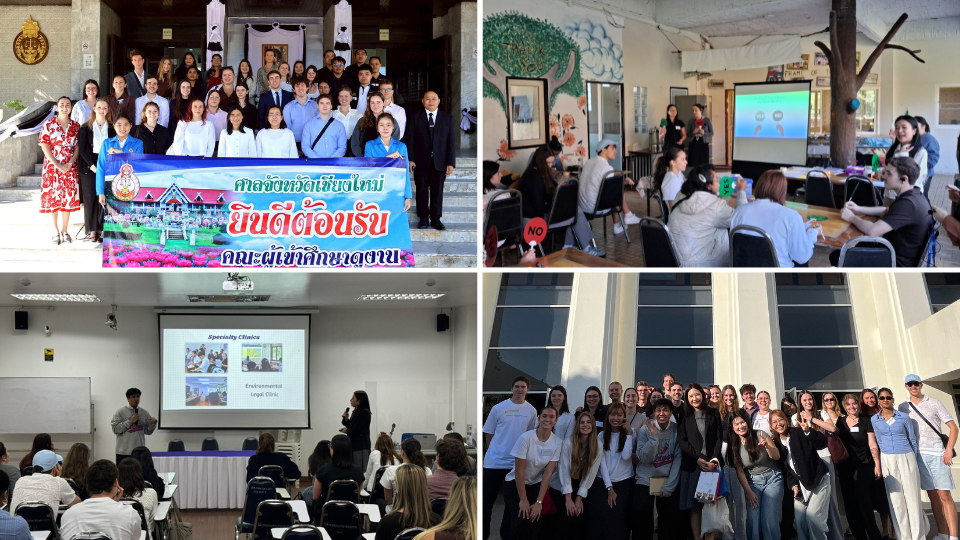
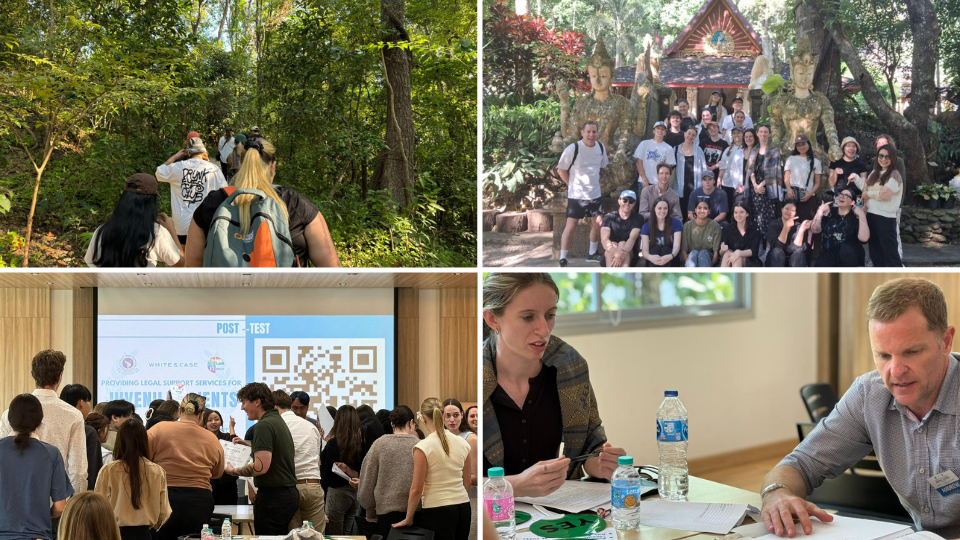
In the first week, students visited the Chiang Mai Provincial Court and met Chief Judge Thatchaphon Cha-oom and Judge Warattaphon Uthayaratana, who spoke about Thailand’s legal system, judicial process, and legal aid and pro bono, and answered students’ questions on the judiciary. Students worked on various projects and gained experience in legal knowledge and practical skills that are applicable to the daily workings of a non-profit organization. They engaged with the local community and with single mothers at the Wildflower Home Foundation who were affected by poverty, domestic violence, and abuse to raise awareness of children’s rights within the context of Thai laws and to promote parental education on child protection and child abuse prevention through an interactive presentation. They traveled to the Faculty of Law of Chiang Mai University, where they were given a tour of the legal consultation center and met with clinic director Assistant Professor Suthasinee Supa and native Thai law students, and this visit included extensive exchanges about the history and background of clinical legal education in relation to Australia and Thailand, as well as pro bono and community outreach programs provided by each university. As part of their physical, emotional and social well-being, students hiked through the monk’s trail to Wat Pha Lat, nestled in lush forests, went up to the mountain summit, and stopped at Wat Phra That Doi Suthep, viewing the city of Chiang Mai from up high. The group attended the Gate Theater’s justice play Restive souls, which depicted the situation of human trafficking, and White & Case’s workshop on providing legal support services for juvenile clients.
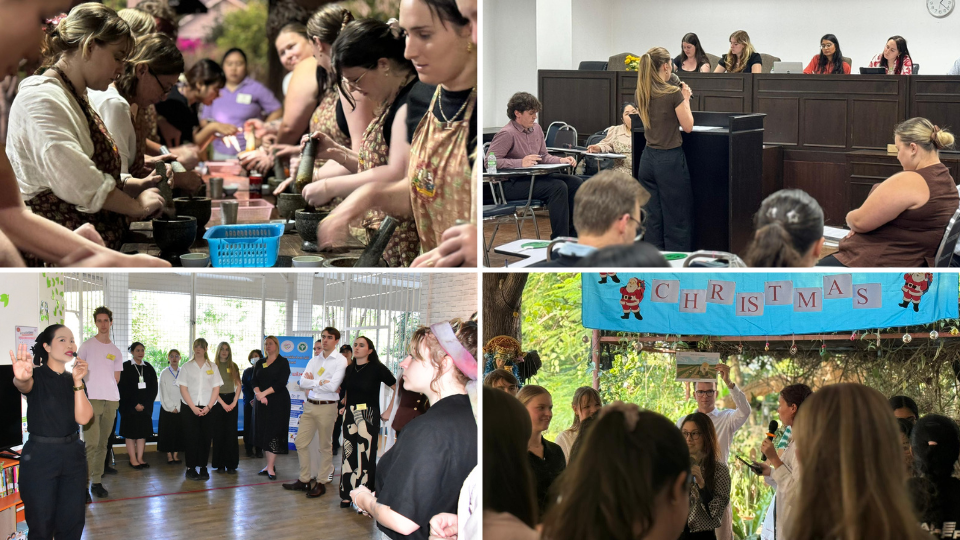
As the program entered its second week, students learned how to make traditional Thai food such as pad-kra-pao (spicy stir-fry dish with basil leaves), poh-pia-tod (fried spring rolls), tom-yum-goong (hot and sour soup with prawns), and khao-niew-ma-muang (sticky rice with mango). Students conducted a mock sentencing hearing, argued hypothetical legal cases on gender-based violence using aggravating and mitigating factors to balance and achieve a fair and appropriate sentence through the application of ethical obligations, laws, and standards of practice; the process of judicial sentencing decision making were demystified as judges demonstrated how several factors are considered when imposing a sentence, accompanied by insightful information about gender violence in Australia highlighted by Head of QUT Law School Professor Amanda Kennedy. They had a rare opportunity to tour Chiang Mai Women Correctional Institution to learn about the incarceration process, its rehabilitation programs that support transitions for the incarcerated to reintegrate into society, and the health care in prison, and they engaged in meaningful dialogue with Director Wiponpak Kaiboonsri and other staff members. The group returned to the Wildflower Home Foundation to educate the community members on human rights awareness.
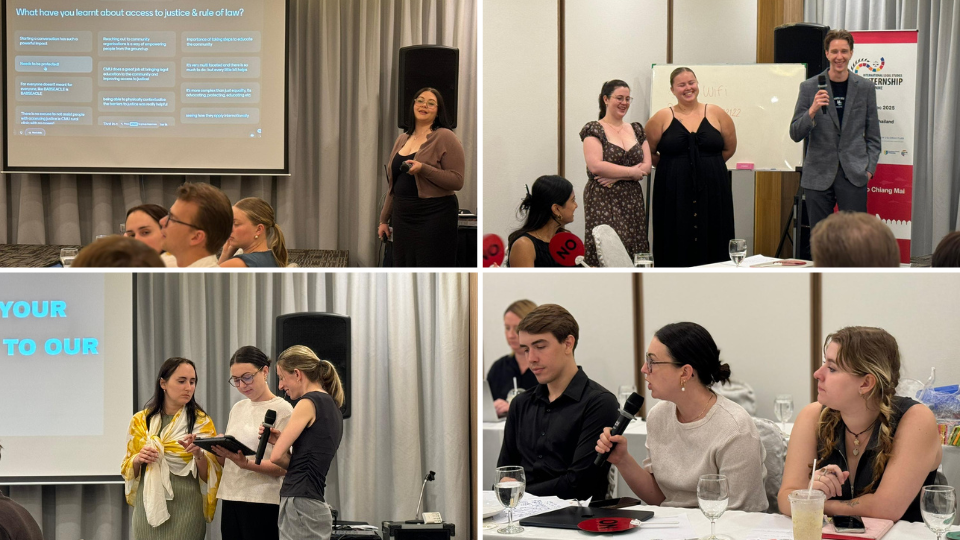
The program concluded with students’ reflections session where they contributed their impactful personal and collective experiences obtained from the externship, the skills they have developed, the knowledge they have gained, and the lessons they have learned.
We are grateful to all the supervisors from four Australian universities for the hard work they do and for working alongside us to make this happen—to the New Colombo Plan, to all justice organizations, to Chiang Mai University, to all guest speakers, and to all the externship students for their enthusiasm and participation. Without all of you, the program would not have been such a huge success.