Asia Fair Trial Practices Roundtable
The Right to Effective Interpretation as an Essential Safeguard to Ensure Fair Trials
Effective interpretation is essential to ensuring that an accused person can understand the proceedings, communicate effectively, participate meaningfully in their defence and exercise their rights on an equal basis. This is especially urgent in South-East Asia, a region shaped by linguistic diversity, large-scale labour migration, tourism, displacement, cross-border trade, and transnational criminal investigations.
The roundtable will explore international standards, practical approaches to identifying and challenging language-related unfairness, and comparative examples of good practice from different jurisdictions.
Date: 7 October 2026
Time:
Sydney: 5:30 PM l Singapore: 3:30 PM l Bangkok: 2:30 PM l Mumbai: 1:00 PM l British Summer Time: 8:30 AM l Central European Summer Time: 9:30 AM
Platform: Zoom
Who Should Attend?
- Legal professionals and practitioners
- Paralegals and other professionals, including but not limited to social workers and healthcare providers
- Law journalists
- Law lecturers
- Judges
- Prosecutors
- Scholars and academics
- Researchers in the field of law and human rights
- Advocates for fair trial practices
- Civil society, NGOs, and individuals who are engaged in the work related to fair trial and pre-trial detention.
Resources
DIY Practical Guide for Defence Lawyers to Protect Client Confidentiality
This practical guide helps practicing lawyers protect client confidentiality and secure communications in challenging environments where privacy and security may be at risk.
This guide does not constitute legal advice. Practitioners must verify the current law in their jurisdiction.
Criminal Justice Proceedings Involving Persons with Disabilities
The checklist is designed as a readily referable tool to support effective participation of persons with disabilities in criminal proceeding and can be incorporated into everyday practice.
This checklist does not constitute legal advice. Practitioners must verify the current law in their jurisdiction.
Practice Tips for Lawyers Representing People Who Use Drugs
These Practice Tips provide a step-by-step guide for representing People Who Use Drugs (PWUD) facing criminal proceedings, with the aim of ensuring a fair trial process.
This guide does not constitute legal advice. Practitioners must verify the current law in their jurisdiction.
Previous Roundtables
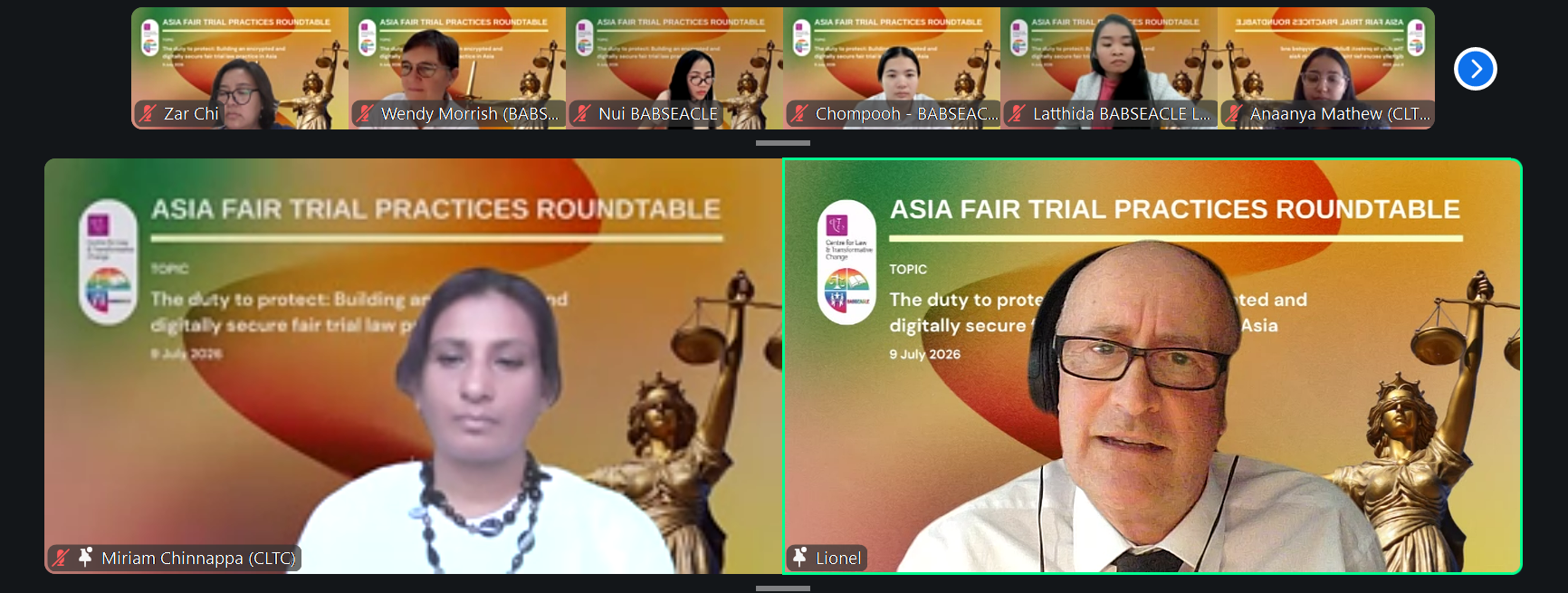
The duty to protect: Building an encrypted and digitally secure fair trial law practice in Asia
9 July 2026
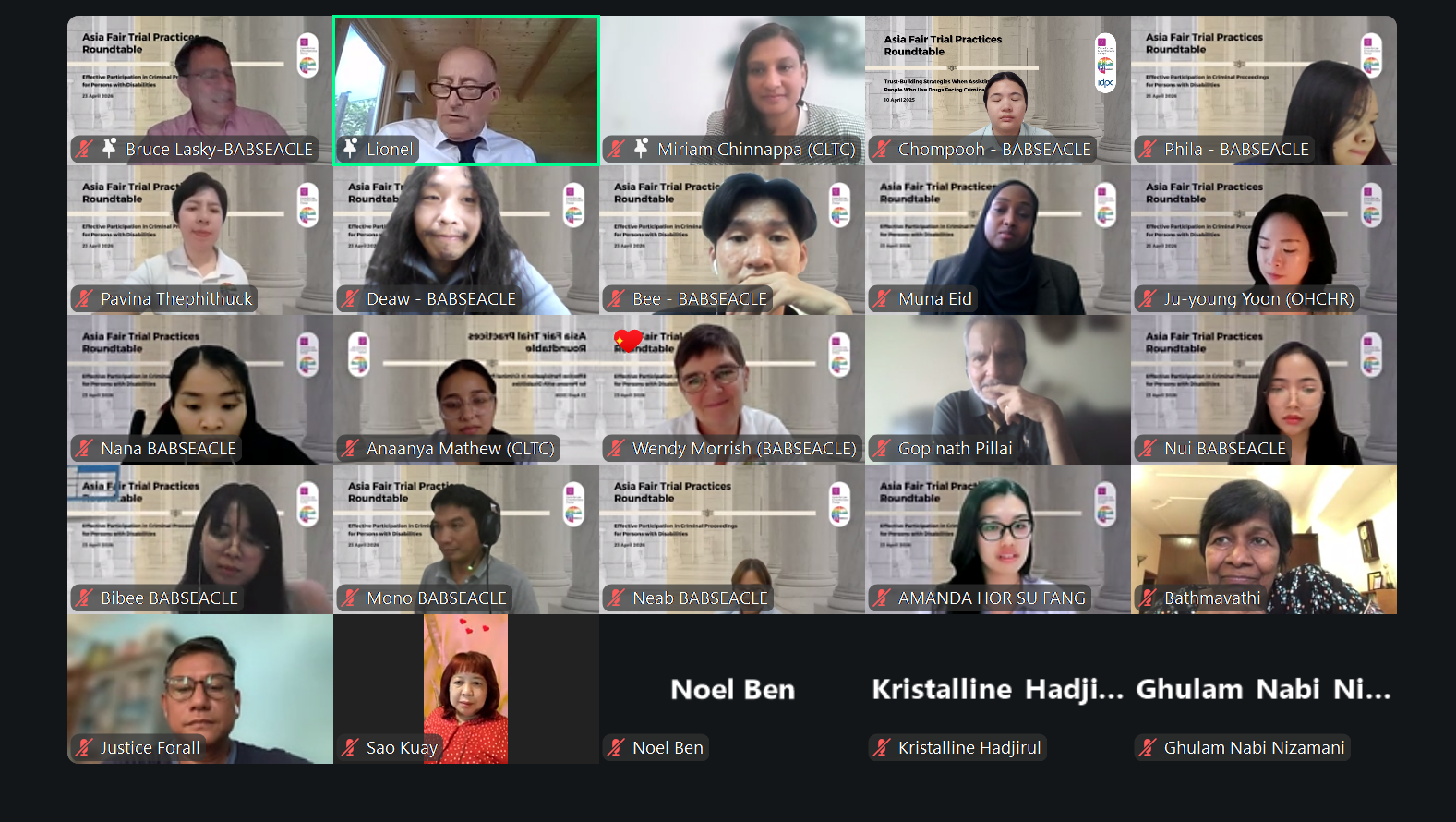
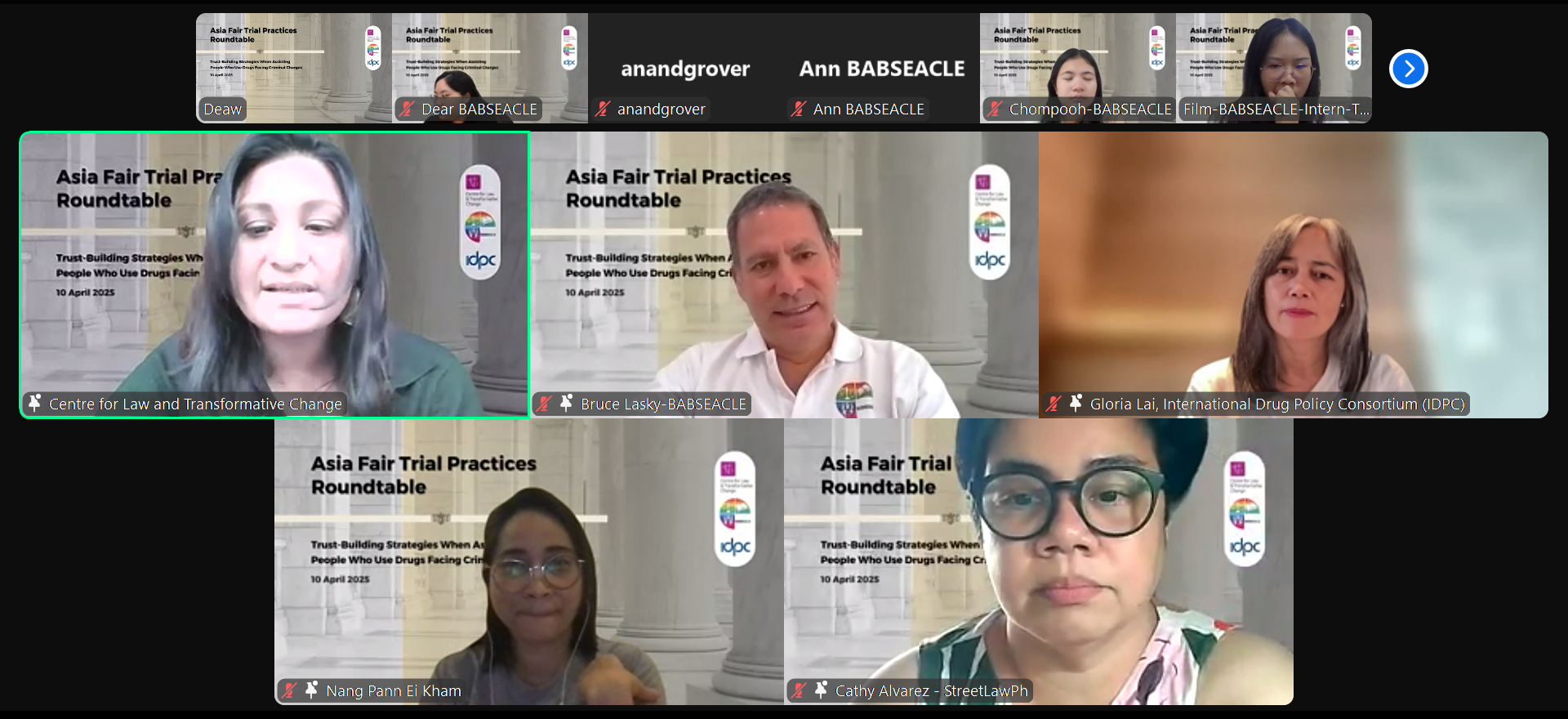
Trust-Building Strategies When Assisting People Who Use Drugs Facing Criminal
10 April 2025
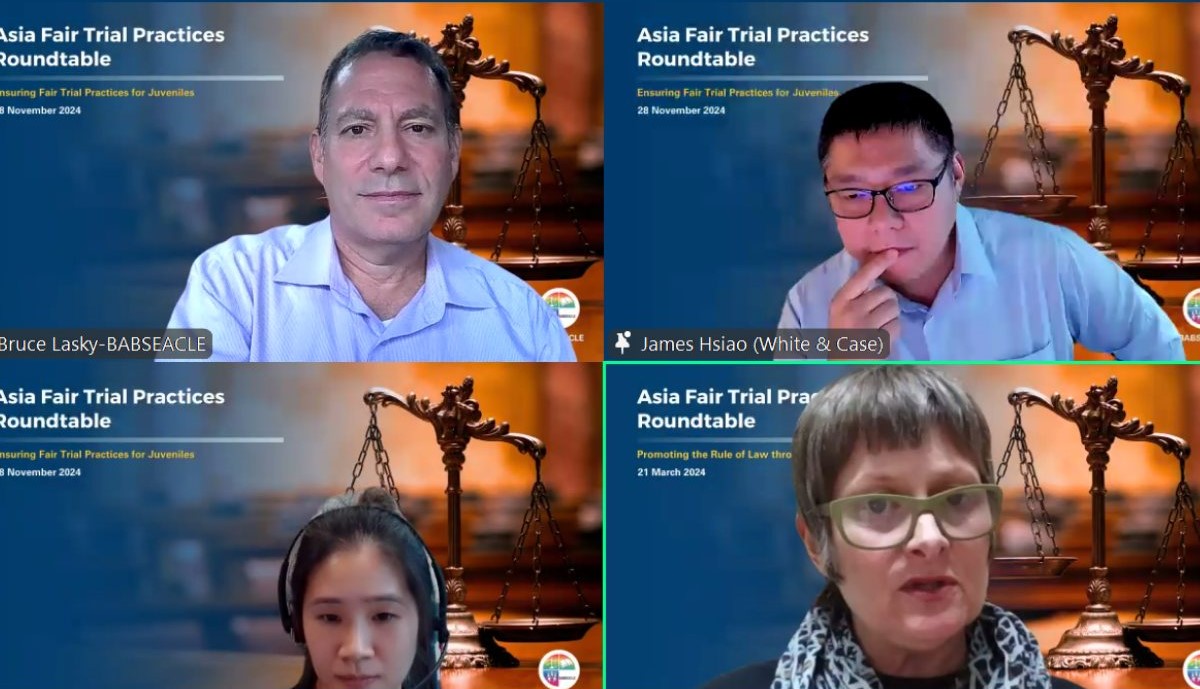
28 November 2024
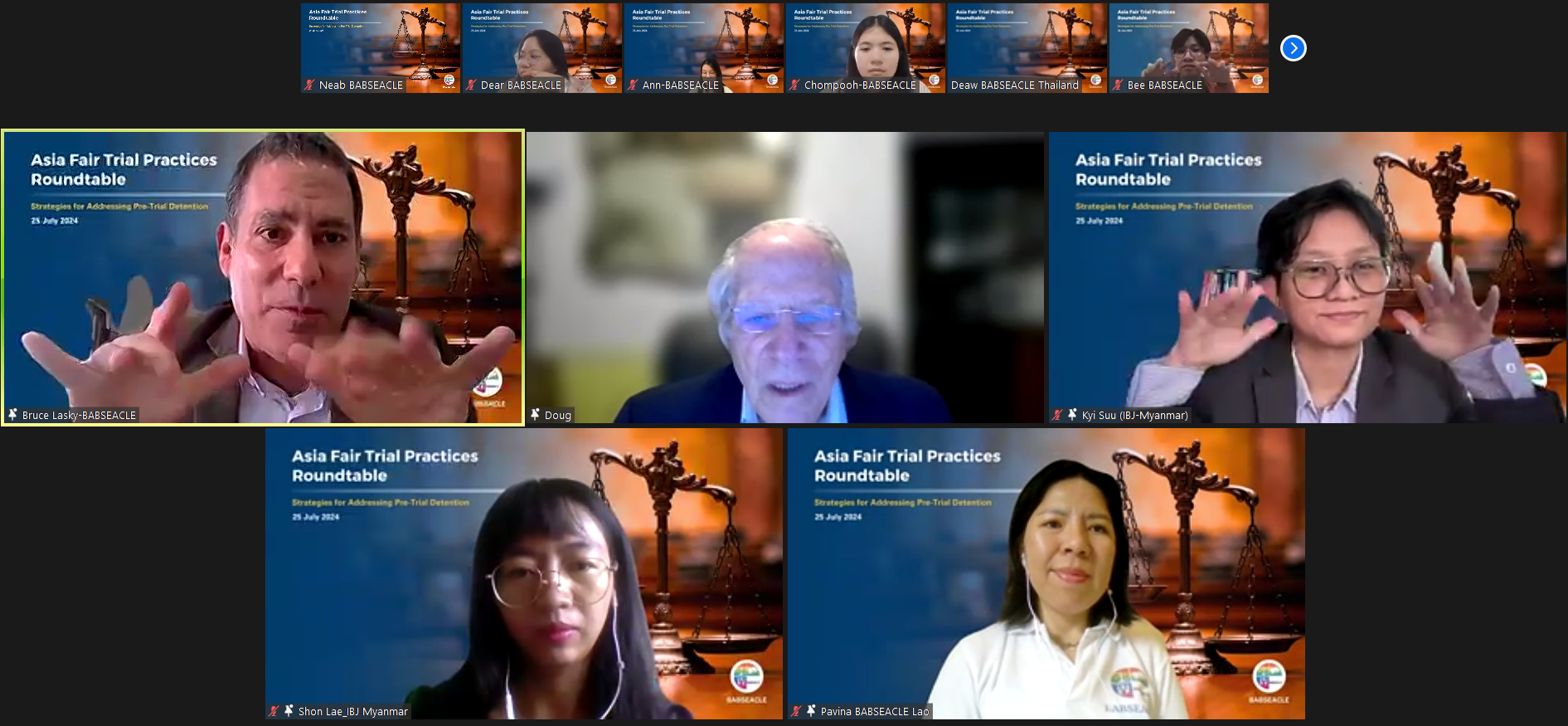
Strategies for Addressing Pre-Trial Detention
25 July 2024
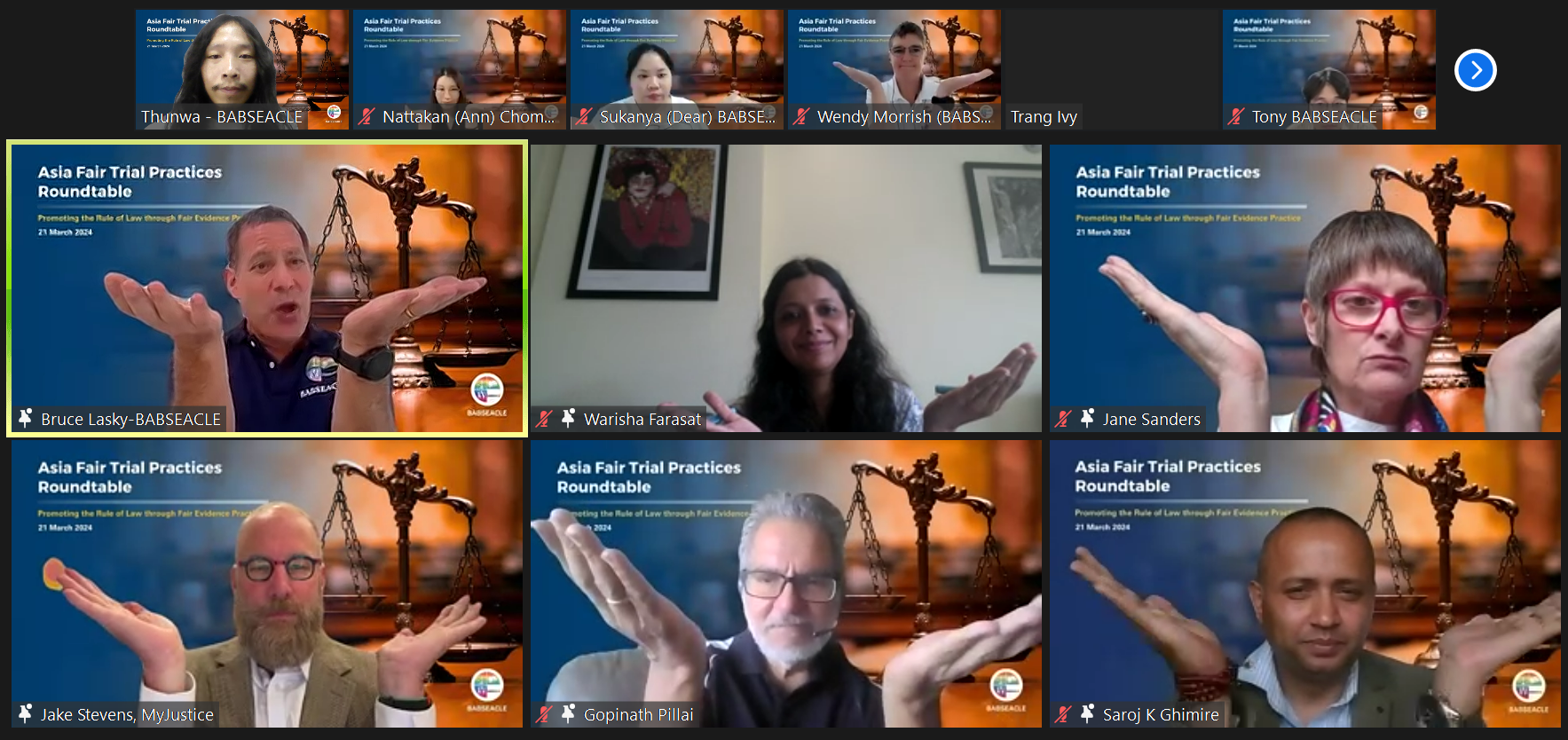
Promoting the Rule of Law through Fair Evidence Practice
21 March 2024
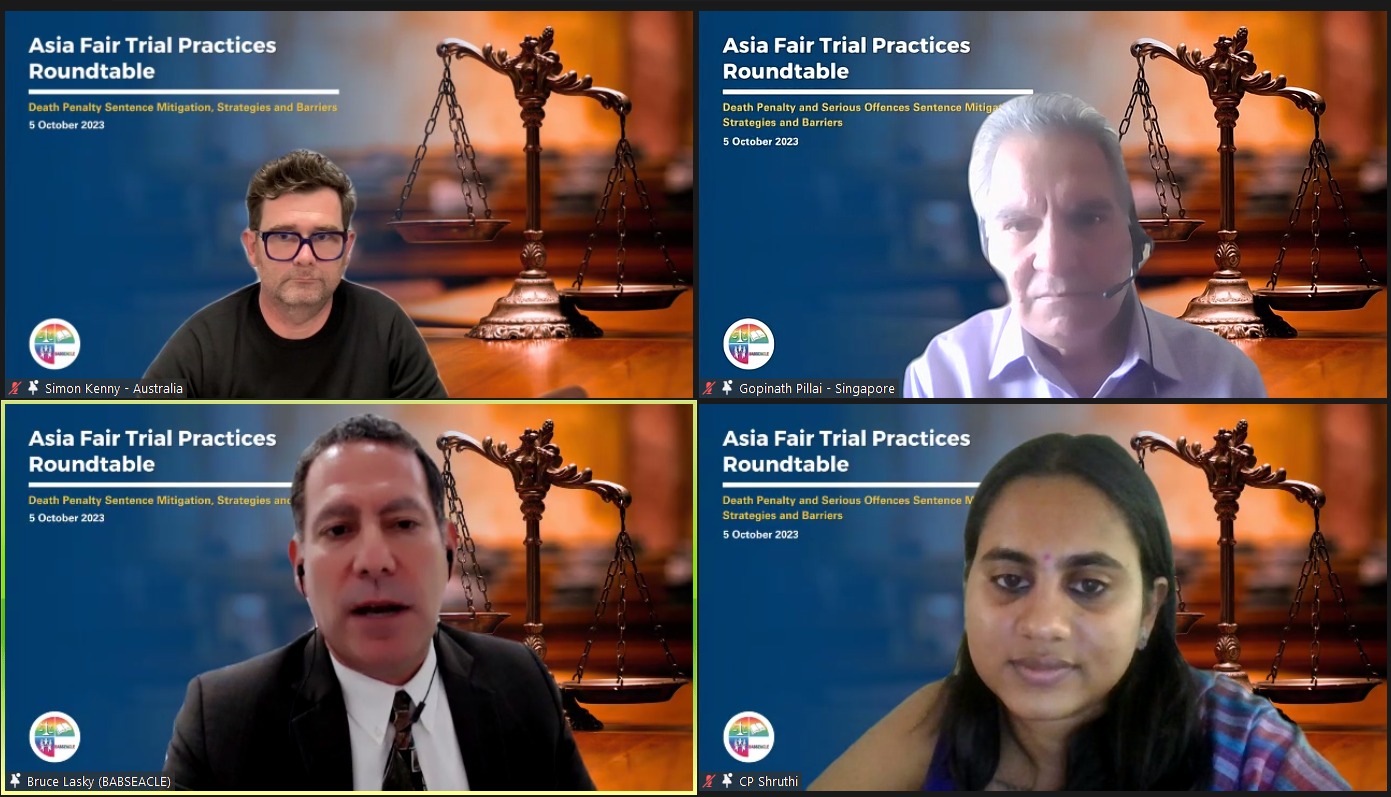
Death Penalty and Serious Offences Sentence Mitigation, Strategies and Barriers
5 October 2023
Contact
For more information, please contact the BABSEACLE team at [email protected] or reach out to the Centre for Law and Transformative Change (CLTC) at https://cltc.law/contact/.